
Studying at home sounds comfortable and easy, but in reality, it is one of the biggest challenges for students. There is no teacher watching, no classroom environment, and no strict routine. Instead, there are distractions everywhere , mobile phones, social media, family conversations, noise, and sometimes even your own thoughts.
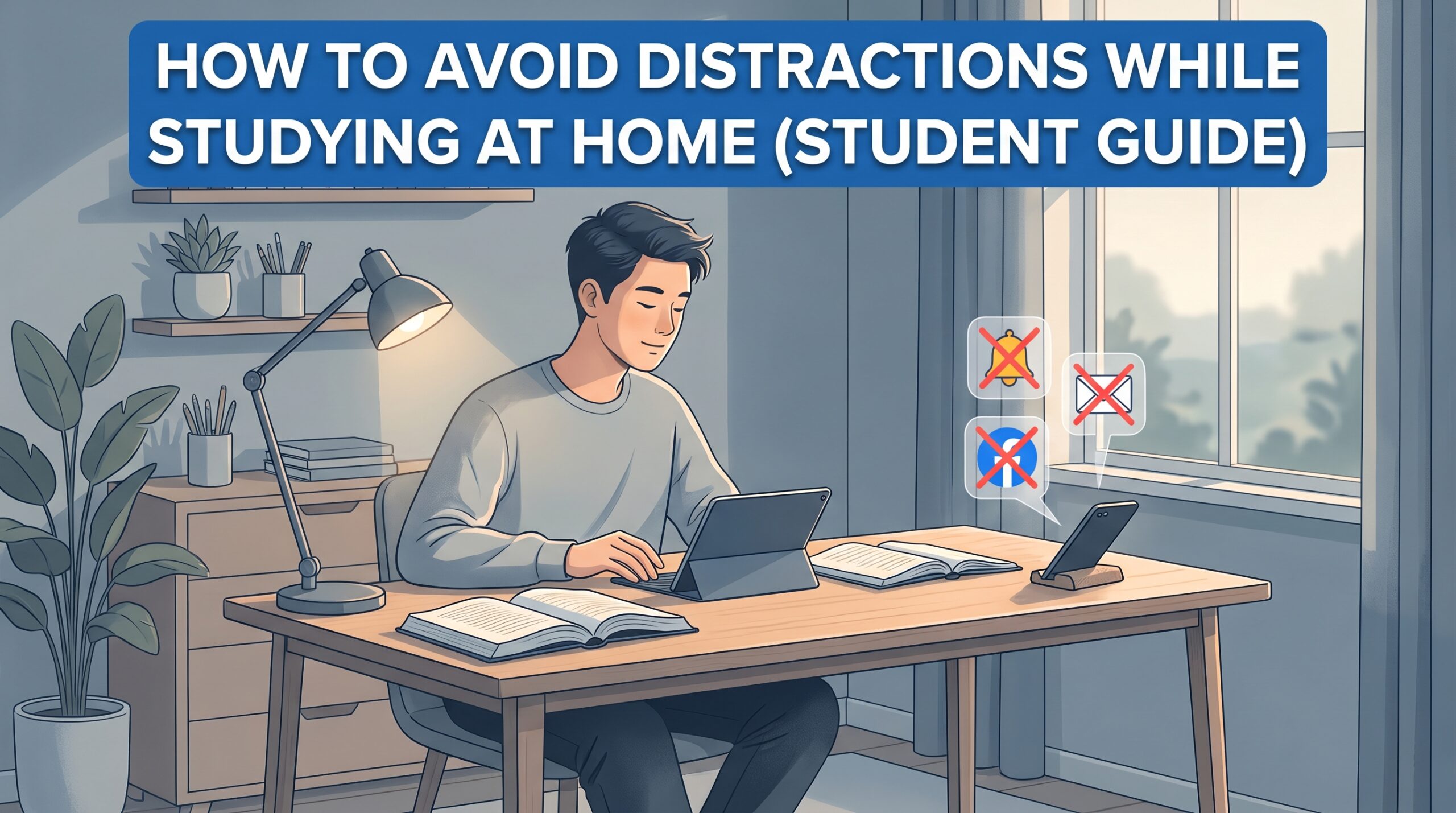
Many students in Pakistan start studying with good intentions but lose focus within minutes. They sit with books open, but their mind keeps wandering. Hours pass, but actual study time remains very low. This creates stress, low confidence, and poor results in exams.
The good news is that focus is not something you are born with , it is a skill that can be developed with the right approach. In this detailed guide, you will learn how to stay focused while studying at home, remove distractions, and build a study routine that actually works.
Why Studying at Home Feels So Difficult
Before fixing the problem, it is important to understand why studying at home feels harder than studying in school or college.
At home:
- There is no structured environment
- Distractions are always nearby
- There is no external pressure
- Comfort leads to laziness
- Routine is often missing
When you sit in a classroom, your brain automatically understands that it is time to focus. At home, your brain sees the same place for rest, entertainment, and study , which creates confusion.
Because of this, focus becomes difficult unless you create your own system.
The Reality of Distractions
Most students believe they cannot focus because they are “lazy,” but the real issue is distractions.
Common distractions include:
- Mobile phones and social media
- Notifications and messages
- TV and background noise
- Family interruptions
- Overthinking and daydreaming
Even small distractions can break your focus completely. For example, checking your phone for just one minute can turn into 20 minutes without realizing it.
The goal is not to remove all distractions completely (which is impossible), but to control them effectively.
Create a Dedicated Study Space
One of the most powerful ways to improve focus is to create a fixed study place at home.
Your study space should:
- Be clean and organized
- Have minimal distractions
- Be comfortable but not too relaxing
- Be used only for studying
Avoid studying on your bed. When you sit on a bed, your brain connects it with sleep and relaxation, not focus.
Even if you have a small space, try to create a corner that is only for studying. Over time, your brain will automatically connect that place with focus.
Build a Simple Study Routine
Lack of routine is one of the biggest reasons students lose focus.
Instead of studying randomly, create a simple daily routine. You do not need a complicated timetable , just a basic structure.
For example:
- Study in the morning when your mind is fresh
- Take short breaks between sessions
- Keep a fixed study time daily
When you follow a routine, your brain gets used to focusing at specific times.
Use the “Short Study Sessions” Method
Many students try to study for long hours without breaks. This often leads to tiredness and loss of focus.
Instead, use short study sessions.
For example:
- Study for 25–40 minutes
- Take a 5–10 minute break
- Repeat the cycle
This method keeps your brain active and prevents burnout.
During breaks, avoid using your phone. Instead, relax your mind, stretch, or walk for a few minutes.
Control Mobile Phone Usage
Mobile phones are the biggest distraction for students today.
If you want to improve focus, you must control phone usage.
Simple strategies include:
- Keep your phone in another room
- Turn off notifications
- Use apps that block distractions
- Set specific times for checking your phone
At first, this may feel difficult, but after a few days, it becomes easier.
Set Clear Study Goals
Studying without a goal reduces focus. Your brain needs direction.
Instead of saying “I will study today,” set a clear goal like:
- I will complete one chapter
- I will solve 20 questions
- I will revise one topic
Clear goals make your study sessions more productive and focused.
Improve Your Mental Focus
Focus is not just about the environment , it is also about your mental state.
If your mind is full of stress, anxiety, or overthinking, it becomes difficult to concentrate.
To improve mental focus:
- Sleep properly
- Avoid overthinking
- Stay positive
- Take small breaks
A calm mind can focus better than a stressed mind.
Avoid Multitasking While Studying

Many students try to do multiple things at the same time, such as:
- Studying and using phone
- Listening to music with lyrics
- Switching subjects frequently
This reduces focus and efficiency.
Instead, focus on one task at a time. Complete it properly, then move to the next.
Use Active Study Methods
Reading passively is not enough. Active study methods improve focus and understanding.
You can:
- Write notes
- Explain topics to yourself
- Solve questions
- Highlight important points
Active learning keeps your brain engaged and prevents distraction.
Take Care of Your Physical Health
Your body and mind are connected. Poor health reduces focus.
To stay focused:
- Get enough sleep (6–8 hours)
- Eat healthy food
- Stay hydrated
- Avoid studying when extremely tired
Even small improvements in health can improve concentration significantly.
Real-Life Example
Consider a student who tries to study while using their phone constantly. They start studying, then check messages, then scroll social media. After two hours, they realized they studied very little.
Now compare this with another student who keeps their phone away, studies for 30 minutes, takes short breaks, and follows a routine. At the same time, they complete more work with better understanding.
This shows how focus strategies make a real difference.
Build Discipline Slowly
Focus does not improve in one day. It takes time and practice.
Start with small steps:
- Study for 20 minutes without distraction
- Gradually increase time
- Stay consistent daily
Over time, your focus will improve naturally.
Avoid Perfection Pressure
Many students wait for the “perfect mood” to study. This is a mistake.
You do not need perfect conditions , you need consistent action.
Even if you are not fully motivated, start studying. Action creates focus, not the other way around.
Keep Yourself Motivated
Motivation helps you stay focused.
You can:
- Remember your goals
- Think about your future
- Reward yourself after study sessions
For example, after completing a study goal, you can take a short break or do something you enjoy.