
Writing a resume for the first time can feel confusing, especially when you are a student or fresh graduate in Pakistan. Most people are unsure about what to include, how to structure it, and how to make it look professional enough to get noticed by employers. Because of this confusion, many strong candidates fail to get interview calls even when they are qualified for the job.
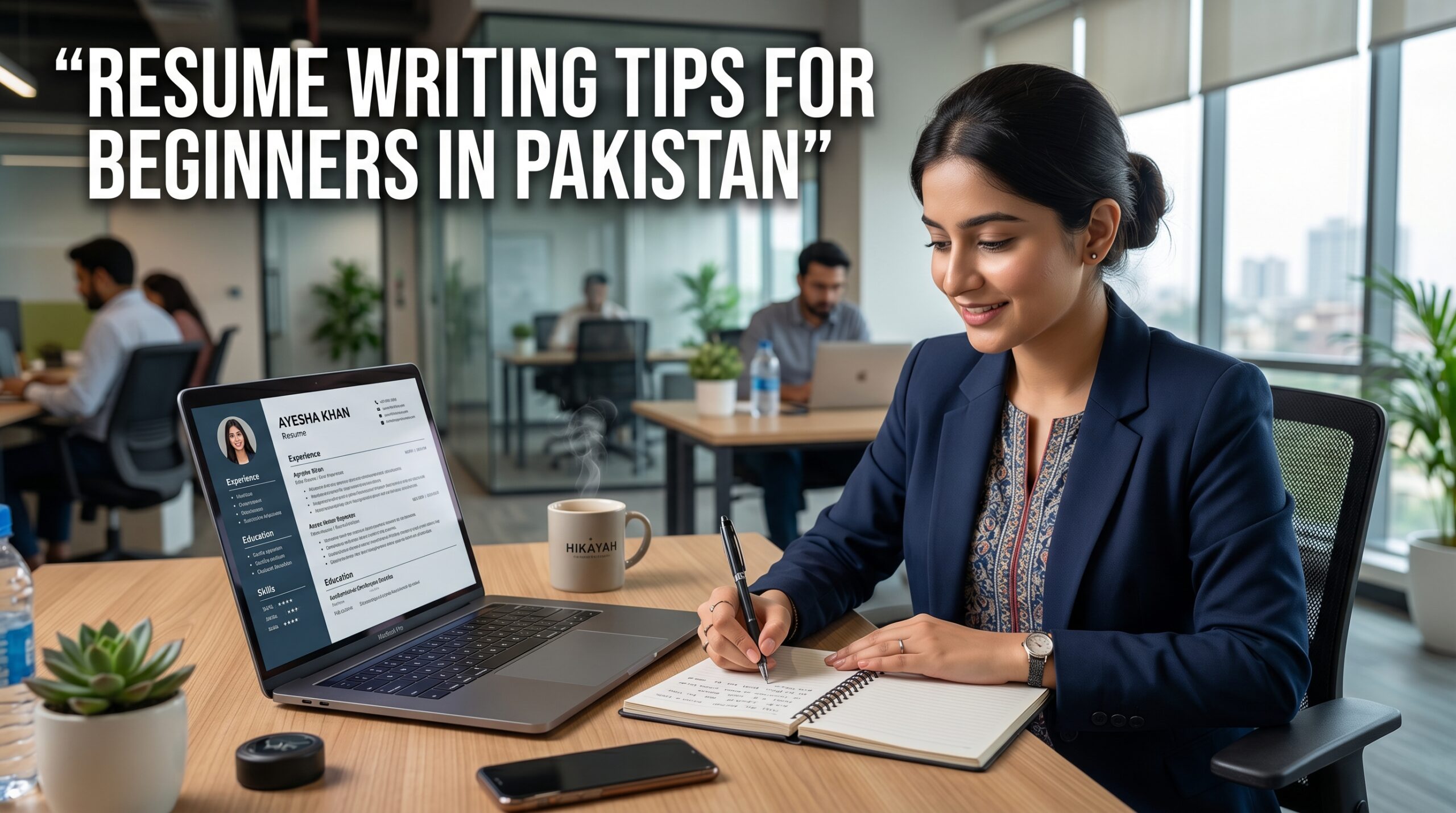
A resume is not just a document. It is your personal introduction in the professional world. In most cases, it is the first impression you create on an employer, and sometimes it is the only chance you get to convince them that you are worth interviewing.
This guide explains resume writing tips for beginners in Pakistan in a simple, practical, and detailed way. Whether you are applying for government jobs, private companies, internships, or entry-level positions, these tips will help you build a strong and professional resume that increases your chances of getting selected.
Understanding What a Resume Really Is
Before writing a resume, it is important to understand its purpose. A resume is a short summary of your education, skills, experience, and achievements. It is not your full life story. Instead, it is a carefully written document that highlights your most relevant qualifications for a specific job.
In Pakistan, many beginners make the mistake of adding unnecessary details like too much personal information, long paragraphs about hobbies, or unrelated experiences. Employers usually do not have time to read everything in detail. They scan resumes quickly and focus only on important points.
A good resume should be:
- Clear and easy to read
- Well-structured
- Relevant to the job
- Free from unnecessary information
Think of your resume as a marketing tool. You are “marketing” yourself to employers, and your goal is to convince them in a few seconds that you are a suitable candidate.
Why a Good Resume Matters in Pakistan Job Market
The job market in Pakistan is competitive. Thousands of applicants apply for the same position, especially for government jobs and popular private companies. In such a situation, your resume becomes your biggest advantage or your biggest weakness.
Many employers receive hundreds of applications for a single job opening. They do not have time to read every resume in detail. Instead, they quickly scan and shortlist only those candidates who present their information clearly and professionally.
A strong resume can:
- Increase your chances of getting shortlisted
- Help you stand out from other applicants
- Create a positive first impression
- Improve your chances of getting interviews
On the other hand, a poorly written resume can lead to rejection even if you are qualified.
Common Resume Writing Mistakes Beginners Make
Before learning how to write a good resume, it is important to understand what mistakes to avoid. Many beginners in Pakistan unknowingly make the same errors.
One common mistake is adding too much personal information such as religion, CNIC number, or full address in unnecessary detail. Another mistake is using outdated formats or copying someone else’s resume without making changes.
Some people also write long paragraphs instead of using clear sections, which makes the resume difficult to read. Spelling and grammar mistakes are also very common and can create a negative impression.
Understanding these mistakes helps you avoid them and improve your resume quality from the beginning.
Basic Structure of a Professional Resume
A well-structured resume is easy to read and understand. Employers prefer resumes that are organized and simple. A basic resume structure for beginners in Pakistan usually includes the following sections:
Your name and contact details should be placed at the top. After that, a short career objective is added to explain your goals. Then comes your education section, followed by skills and any experience you may have. Finally, you can include additional information like certifications or achievements.
Each section should be clearly separated so that the employer can quickly find important information.
How to Write a Strong Career Objective
The career objective is one of the most important parts of your resume. It is a short paragraph at the top that explains your career goals and what you are looking for.
Many beginners write vague objectives like “I want a challenging job in a good company.” This does not provide any useful information to employers.
A strong career objective should be specific and relevant to the job you are applying for. For example, if you are applying for an office assistant role, your objective should mention your interest in administrative work and your willingness to learn and contribute.

A good objective shows focus, motivation, and clarity about your career direction.
Writing Your Education Section Properly
In Pakistan, education plays a very important role in job applications, especially for fresh graduates. Employers often look at your academic background first before anything else.
When writing your education section, include your degree, institution name, and year of completion. If you are still studying, mention your expected graduation date.
Many beginners make the mistake of listing unnecessary details or writing incomplete information. Keep it simple and clear.
If your academic performance is strong, you can also mention your grades or GPA, but only if it is relevant and beneficial.
Highlighting Skills Effectively
Skills are one of the most important parts of your resume. Employers want to know what you can do, not just what you have studied.
In Pakistan, many beginners ignore this section or write very generic skills like “hardworking” or “honest.” While these are good qualities, they do not show technical ability.
Instead, focus on practical skills such as:
- Computer skills
- Communication skills
- Typing speed
- Microsoft Office knowledge
- Problem-solving ability
If you are applying for a specific job, make sure your skills match the requirements of that role.
Adding Experience (Even If You Are a Beginner)
One of the biggest concerns for beginners is lack of experience. Many students think they cannot apply for jobs because they have no work experience.
However, experience does not always mean full-time jobs. You can include:
- Internships
- Volunteer work
- Freelance projects
- Part-time jobs
- School or college projects
Even small experiences show that you have practical exposure and are willing to work.
For example, if you helped organize a college event, that can be mentioned as experience in event management or teamwork.
Importance of Formatting and Design
The design of your resume is just as important as the content. A messy or poorly formatted resume can create a bad impression even if your information is strong.
Your resume should be clean, simple, and professional. Use consistent fonts and proper spacing. Avoid using too many colors or decorative elements.
In Pakistan, many beginners use overly complex designs that make the resume difficult to read. A simple black-and-white format is often more effective.
Remember, employers prefer clarity over creativity when it comes to resumes.
Keeping Your Resume Short and Focused
One common mistake beginners make is writing very long resumes. A resume should ideally be one page for fresh graduates and beginners.
Employers do not need your entire life history. They only need relevant information that helps them decide whether you are suitable for the job.
Keeping your resume short forces you to focus on the most important details and remove unnecessary information.
Customizing Resume for Each Job
A strong resume is not the same for every job. You should customize it based on the position you are applying for.
For example, if you are applying for a teaching job, highlight your communication skills and subject knowledge. If you are applying for an office job, focus on computer skills and organization abilities.
Customizing your resume shows that you have taken time to understand the job and are serious about the opportunity.
Using Simple and Professional Language
The language used in your resume should be simple, clear, and professional. Avoid using complicated words or overly long sentences.
Your goal is to make it easy for employers to understand your qualifications quickly. Clear communication is always better than complex wording.
Final Practical Tips for Beginners
Before sending your resume, always review it carefully. Check for spelling mistakes, missing information, or formatting issues. Make sure your contact details are correct so employers can reach you easily.
It is also helpful to ask someone else to review your resume before submission. A second opinion can help you identify mistakes you may have missed.
Building a strong resume takes time, but once you understand the basics, you can easily improve it for future job applications.